Across Canada, the trend towards high-performance renovations has become increasingly significant in the modern housing market. A combination of ageing housing stock, rising energy prices, and a growing desire for healthier indoor environments is driving homeowners to seek smarter, more effective renovation solutions. For builders and renovators, this shift is both a challenge and an opportunity: how can older homes be upgraded to boost durability, comfort, and efficiency, without introducing unnecessary complexity or cost? The following sections outline the upgrades that are most critical to achieving high-performance results.
- Air Tightness: The Foundation of a High-Performance Home
Improving air tightness is the single most impactful upgrade in a high-performance renovation. Many older Canadian homes experience significant air leakage due to factors such as deteriorating materials, leaky air barriers, and poorly sealed windows . Addressing these issues yields multiple advantages:
- Reduces uncontrolled heat loss
- Eliminates drafts, resulting in improved comfort
- Often serves as the most cost-effective retrofit step, particularly when blower door testing is used to identify and address problem areas
Key practical strategies for enhancing air tightness with renovations include sealing top plates and rim joists, ensuring there is a continuous air barrier (with poly sealed at all edges, and stopping air leakage at windows, doors, with proper caulking. Even modest improvements in airtightness can lead to substantial gains in comfort and energy efficiency.
Experienced Builders like Blythwood homes will measure the air tightness of your home before and after renovations and test for air leaks that might occur around openings like a hydro connect or gas pipe.
- Above-Grade Walls: Selecting the Right Insulation Approach

If your home is wood frame an experienced builder can add insulation in the walls and add 2” Styrofoam on the exterior for continuous insulation. When these upgrades are paired with an improved air barrier, they will dramatically reduce heat loss and improve comfort in your home.
- HVAC: Rightsizing for Actual Loads
Enhancements to air tightness and insulation typically reduce a home’s heating and cooling demands dramatically. Common issues in older homes include oversized equipment, which can lead, higher energy bills, and reduced comfort. Accurate load calculations and the use of modern furnace equipment that heats based on the actual need in the home , will lead efficiency improvements and deliver more consistent comfort.
- Ventilation & Indoor Air Quality: Essential in Tighter Homes
As homes become more airtight, effective ventilation grows in importance. Balanced systems, such as Heat Recovery Ventilators (HRVs) and Energy Recovery Ventilators (ERVs), help maintain indoor air quality by delivering fresh air while conserving heat.
- Windows & Detailing: Small Mistakes, Big Consequences
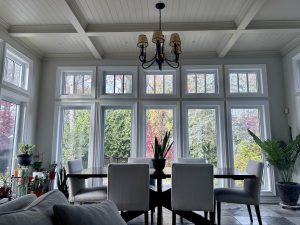
High quality windows that are double or even triple glazed and professionally installed to be free of leaks can be an excellent improvement. Thes must be professionally installed with proper air and water sealing, and employing correct installation techniques and insulation suited to the wall type.
Why These Upgrades Matter
High-performance renovations will give the homeowner lower utility bills, fewer drafts and temperature fluctuations, enhanced indoor air quality. For builders like Blythwood Homes, in the Niagara Region of Ontario, high-performance upgrades are part of their building culture to exceed building code requirements and aim for the best results.
Learn More from Industry Leaders
For those seeking a deeper understanding of high-performance renovation strategies, we suggest you look for the Canadian Home Builders’ Association’s “Towards Net Zero Renos: Renovating for High Performance” webinar series. This freely available resource is highly recommended.